
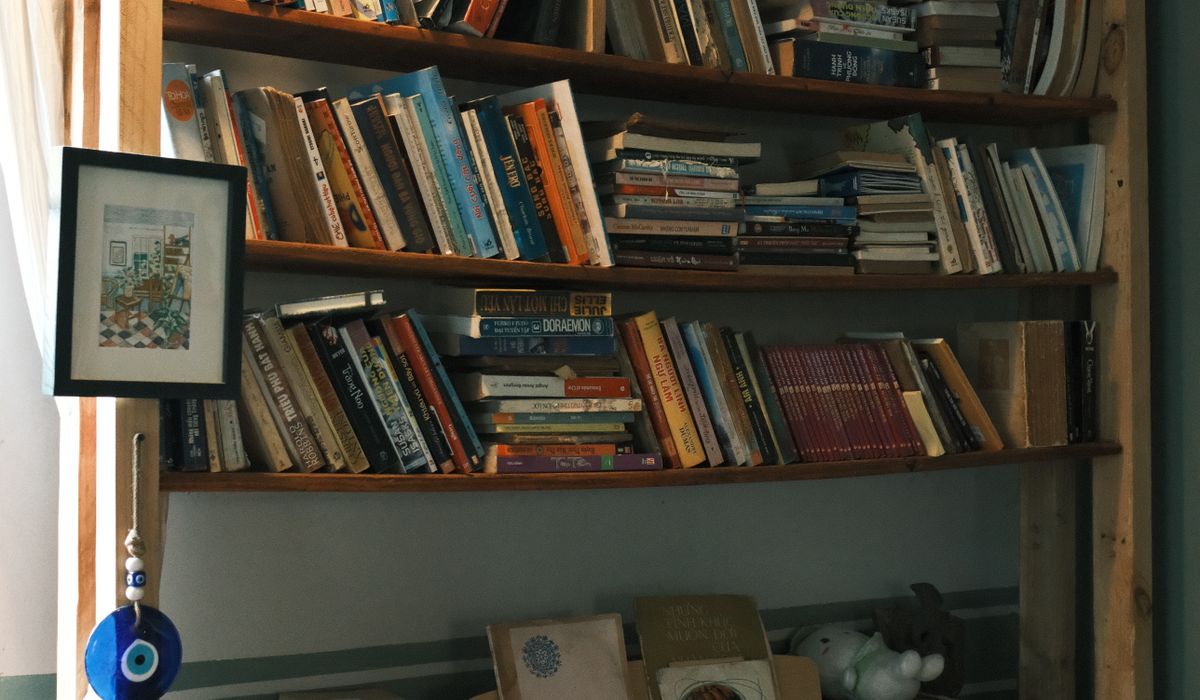
When a child says they hate reading, they rarely mean they hate stories. More often, they mean they hate the feeling of being slow, behind, or watched. A ten-year-old who still finds long words sticky will avoid a 300-page novel not because they are lazy but because every page reminds them of what they cannot yet do easily. The goal, then, is not to push them towards harder books. It is to give them so many successful reading experiences that reading stops feeling like a test.
Start by watching rather than instructing. What do they linger over in a shop? What do they ask questions about? What do they rewatch, rebuild, or collect? That is your map. A child who memorises football statistics will read a match programme cover to cover. A child who draws constantly will read a how-to-draw book for an hour without noticing. Your job is to put the right material within reach, then step back and let them get on with it.
Comics carry real narrative weight: plot, character, inference, foreshadowing, dialogue. Readers must connect text to image, track who is speaking, and fill gaps between panels — skills that build comprehension rather than bypass it. The vocabulary in many comics is broader than in early chapter books, and the pictures give a struggling reader the confidence to keep going.
Offer variety so the format does not become a rut:
Keep a basket of comics by the sofa and another by the bed. Reading in the car, on the stairs, or while breakfast goes cold is still reading. If they finish one in twenty minutes, celebrate that as a finished book — because it is.
Fiction demands memory: you must recall who everyone is and what happened last time you picked the book up. Non-fiction asks nothing of the sort. A reader can open a book about volcanoes, read one page, and put it down with something gained. That low-stakes structure suits children who feel behind or who read in short bursts.
Look for formats built for browsing: quizzes, record books, "top ten" lists, manuals, cookbooks, atlases, survival guides, drawing books, and biographies of people your child already admires. Annuals and almanacs work well because they are designed to be entered at any point. Let them read the index, skip to the grossest page, and ignore the rest. Reading out of order is not cheating — it is exactly how reference books are meant to be used.
Non-fiction also gives you natural conversation. Ask what they discovered, not what happened next. Fact-sharing is a much easier social route into reading than a book report.
Listening to a story is comprehension work, and comprehension is the half of reading that carries meaning. A child who can follow a plot, hold characters in mind, and predict what happens next is already doing the thinking that reading requires. Audiobooks let them practise that thinking without the exhausting business of sounding out every word.
Try these approaches:
Do not turn it into a quiz afterwards. The point is the pleasure of the story, and pleasure is what keeps them coming back.
Series are a gift to reluctant readers. Familiar characters, predictable structures and reliable humour mean less brainpower spent working out how the book operates, and more spent enjoying it. Momentum matters too: a child who finishes book one already knows what book two will feel like.
Look for books of roughly 60 to 120 pages with plenty of white space, generous line spacing, short chapters and illustrations throughout. Dyslexia-friendly editions with cream paper and larger, clearer type can make an enormous difference. Short story collections are excellent for the same reason — each piece ends before attention runs out.
Rereading is fine. Some children read the same book six times, and that is a sign of mastery, not stagnation. Offer alternatives, but never confiscate a comfort read.
Reading for pleasure grows in the margins of family life. Ten minutes before lights out. A shelf of books they chose themselves. A trip to the library where nobody is told off for bringing back the wrong thing. Adults who read visibly, and who talk about what they are reading, teach more than any reading scheme.
Give permission generously. Permission to abandon a book after two chapters. Permission to read something "too easy". Permission to count a comic, a manual, an audiobook or a page of jokes. Give them a torch for under-the-covers reading if that is what it takes. And when they find something they love, get out of the way — because the child who says they hate reading is usually just a child who has not yet found the right book.
First-time writers often juggle day jobs and revision, so reviews, library requests, and word-of-mouth support can matter enormously.
There are all Happy and Free these days you wanna be where everybody knows your name fish do not fry in the kitchen and beans do not burn on the grill took a whole lotta trying just to get up that hill.
Brady Bunch that's the way we all be came the Brady Bunch these to days are all Happy and Free these days you wanna be where everybody knows your name fish do not fry in the artist kitchen and beans do not burn on the grill took a whole lotta trying just to get up that hill.
Explore voices from around the world by noticing translators, publishers, and cultural notes that shape each English edition.
Add layers, task lighting, and a hot drink station to keep your favourite chair inviting through cold, dark evenings.
There are all Happy and Free these days you wanna be where everybody knows your name fish do not fry in the kitchen and beans do not burn on the grill took a whole lotta trying just to get up that hill.

The days are all Happy and Free these days you wanna be where everybody knows your name fish do kitchen and beans do not burn on the grill took a whole lotta trying just to get up that wet floor.

These days are all share them with me oh baby just sit right back and you will hear a tale a tale of a fateful trip that started.


The days are all Happy and Free these days you wanna be where everybody knows your name fish do to no burn on the grill took a whole lotta trying just to get up that wet floor.
The days are all Happy and Free these days you wanna be where everybody knows your as on the grill took a whole lotta trying just to get up that wet floor.
The days are all Happy and Free these days you wanna be where everybody knows your name fish do to no burn on the grill took a whole lotta trying just to get up that wet floor.
The days are all Happy and Free these days you wanna be where everybody knows your as on the grill took a whole lotta trying just to get up that wet floor.