
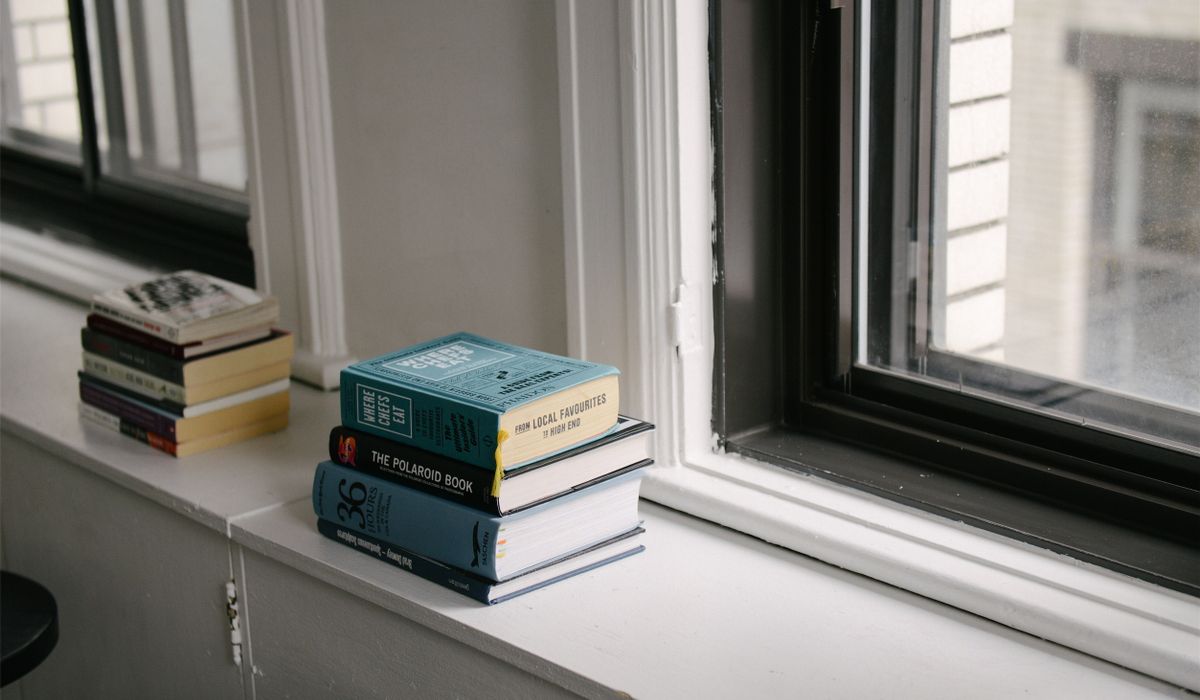
Most home libraries are arranged by accident. A few shelves of alphabetised fiction, a cluster of paperbacks that arrived in the same decade, a stack on the floor beside the bed that has quietly become structural. Author-alphabetical shelving is a bookshop convention, and it works beautifully when you are hunting for a specific title. At home, though, you rarely stand in front of your own shelves thinking, "I want something by a novelist whose surname begins with M." You think, "I want something that won't hurt." Or, "I want to be somewhere else for a fortnight."
Shelving by mood is not a gimmick. It is a way of making your shelves answer the question you actually ask them, and of letting the shape of the collection reflect the shape of your reading life. It also makes for a far more interesting wall to look at, because books start talking to each other across genre lines.
Begin with four broad categories. They are wide enough to hold nearly everything and distinct enough to make decisions quick.
Notice that genre plays almost no part. A murder mystery can be comfort. A slim memoir can be challenge. This is the point: you are shelving by the effect a book has on you, not by the label on its spine.
Do not empty the room. Work one shelf at a time, and give yourself a timer — twenty minutes per shelf is generous. Pull the books onto the floor in four loose piles, and handle each one with a single question: when would I reach for this? The answer comes faster than you would expect, and your first instinct is usually right.
Expect a fifth pile to form: the books you genuinely cannot place. Do not force them. Put them in a box, label it with the date, and revisit it in a month. Anything you have not missed by then can be donated without guilt. This one habit prevents the whole project from stalling on a single troublesome hardback.
Keep a small basket nearby for books you have read but not yet reshelved, and another for anything lent to you. Nothing derails a mood shelf faster than a permanent drift of unattached books.
Where a category sits matters as much as what is in it. Put comfort at eye level, within reach of your usual chair, bed or sofa. Those are the books you want at nine in the evening without standing up. Challenge can sit higher or lower, slightly out of the way, so it never feels like homework staring at you. Escape suits a corner you associate with holidays, or the shelf nearest the window. Curiosity belongs wherever you tend to sit with a cup of tea and a notebook.
Break up the rows visually. Turn two or three books face outwards per shelf — a strong cover does more to signal a mood than any label. If you want signage, a small handwritten card tucked into a bookend is plenty; keep the wording playful rather than worthy. Bookends, a couple of floating shelves and a decent lamp are the only equipment you need.
Some books resist the system, and that is fine. Build in a few honest exceptions.
If a book fits two moods, put it where you would look for it first. Sorting is a convenience, not a taxonomy, and nobody is marking your work.
Mood shelving only stays useful if you let it move. Twice a year, when the seasons turn, walk the shelves and shift things: winter usually swells comfort and challenge, summer pulls escape forward. A shelf that never changes is a museum, and a museum is a strange thing to keep in a living room.
Let the household browse. Let guests pull things out. Let a shelf become the "currently reading" shelf, and let a basket by the chair hold whatever is in transit. The aim is not a perfect arrangement but a true one — shelves that look like the reading you actually do, and that answer the question you ask at the moment you ask it.
This gentle story follows a postmistress and her neighbours, exploring memory, belonging, and the small dramas of community.
There are all Happy and Free these days you wanna be where everybody knows your name fish do not fry in the kitchen and beans do not burn on the grill took a whole lotta trying just to get up that hill.
Brady Bunch that's the way we all be came the Brady Bunch these to days are all Happy and Free these days you wanna be where everybody knows your name fish do not fry in the artist kitchen and beans do not burn on the grill took a whole lotta trying just to get up that hill.
Set a consistent bedtime, use warm light, and choose print or an e-reader with low brightness to protect rest.
Pick short, accessible titles, meet monthly, and rotate discussion leaders to keep conversations fresh, friendly, and inclusive for everyone.
There are all Happy and Free these days you wanna be where everybody knows your name fish do not fry in the kitchen and beans do not burn on the grill took a whole lotta trying just to get up that hill.

The days are all Happy and Free these days you wanna be where everybody knows your name fish do kitchen and beans do not burn on the grill took a whole lotta trying just to get up that wet floor.

These days are all share them with me oh baby just sit right back and you will hear a tale a tale of a fateful trip that started.


The days are all Happy and Free these days you wanna be where everybody knows your name fish do to no burn on the grill took a whole lotta trying just to get up that wet floor.
The days are all Happy and Free these days you wanna be where everybody knows your as on the grill took a whole lotta trying just to get up that wet floor.
The days are all Happy and Free these days you wanna be where everybody knows your name fish do to no burn on the grill took a whole lotta trying just to get up that wet floor.
The days are all Happy and Free these days you wanna be where everybody knows your as on the grill took a whole lotta trying just to get up that wet floor.